


Extending expert Ophthalmology Clinical Trials Service in the USA, India, and Europe, covering all ophthalmology clinical trial phases with regulatory-compliant study design, clearly defined ocular and visual function endpoints, robust protocol development, comprehensive regulatory support, and patient-centric trial solutions tailored to diverse ophthalmic indications.
Clinical research in eye disorders demands a high level of scientific precision, specialized assessment tools, and strict adherence to regulatory and ethical standards. Studies involving vision-related outcomes rely on well-defined protocols, validated clinical endpoints, experienced investigators, and robust safety monitoring to ensure accurate and reliable results. As ophthalmic therapies continue to evolve, effective clinical trial execution across multiple regions is essential to generate high-quality data while maintaining patient safety and operational consistency.
ProRelix Research provides Global Ophthalmology Clinical Trial CRO services, offering end-to-end support for ophthalmic drug, biologic, and device studies across the USA, India, Europe, and other regions. With strong expertise in ophthalmology-focused study design, regulatory submissions, site management, patient recruitment, and data oversight. We supports all phases of clinical development. Its global reach combined with localized regulatory knowledge enables efficient, compliant, and patient-centric execution of ophthalmology clinical trials worldwide.
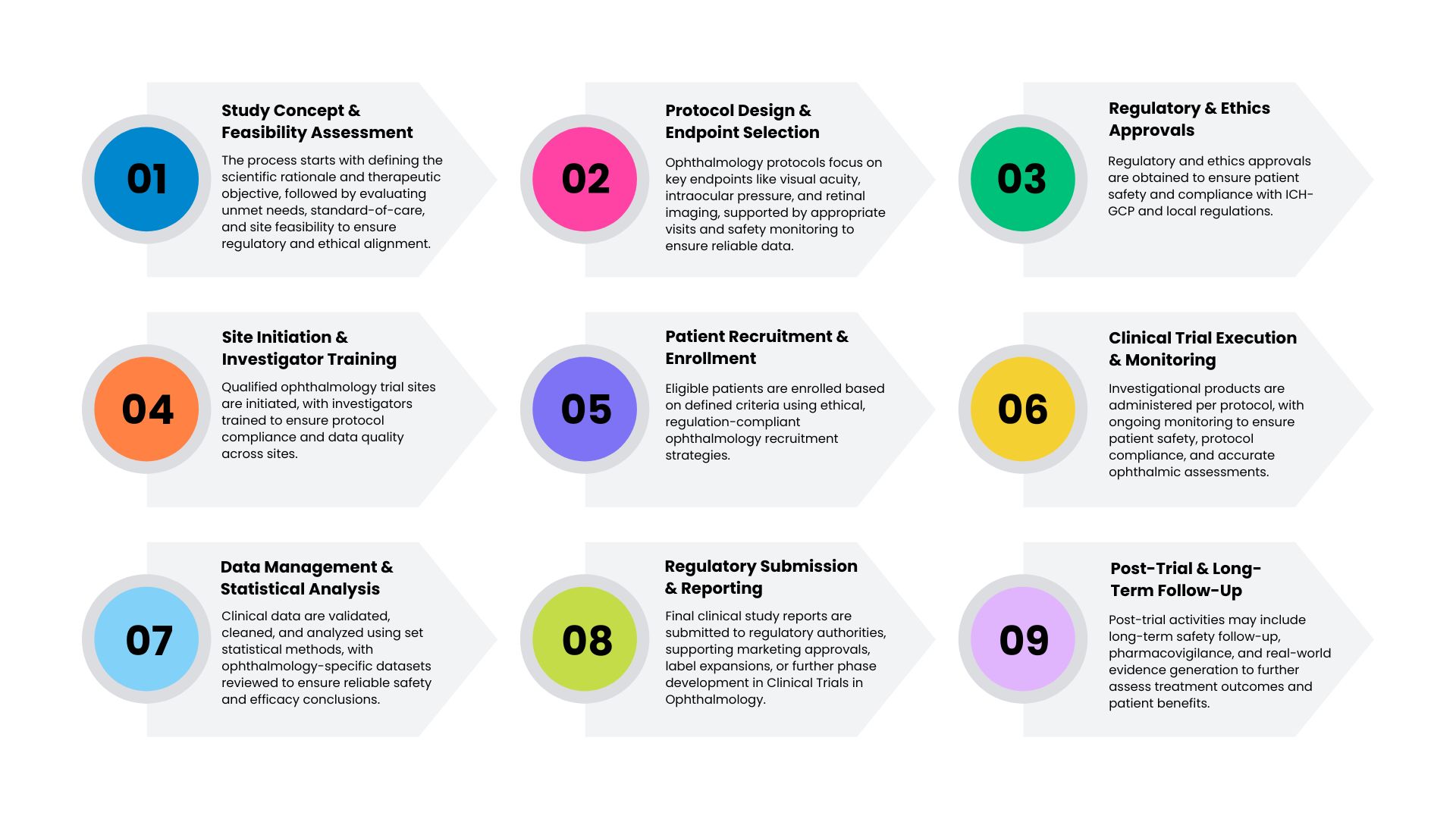
ProRelix Research follows a regulated, precision-focused ophthalmology clinical trial process to evaluate the safety and efficacy of eye therapies, using specialized study designs and strict compliance to ensure high-quality, globally aligned results.
Glaucoma is a progressive eye disorder that damages the optic nerve, often due to elevated intraocular pressure. Early detection is crucial to prevent vision loss. Ophthalmology clinical trials for glaucoma help develop new therapies, improve treatments, and slow disease progression. ProRelix Research ensures patient-focused, regulatory-compliant studies for safe and reliable outcomes.
A condition affecting the central part of the retina (macula), leading to loss of central vision, blurred vision, or visual distortions, primarily in older adults.
A complication of diabetes that damages retinal blood vessels, potentially causing vision impairment, floaters, or blindness if not properly managed.
Dry Eye Disease is a chronic condition in which the eyes produce insufficient tears or tears evaporate too quickly, causing dryness, burning, redness, irritation, and fluctuating vision; within clinical Ophthalmology and eye health, it is recognized as a multifactorial ocular surface disorder influenced by factors such as aging, prolonged screen use, environmental conditions, medications, and systemic diseases, making timely diagnosis and appropriate management essential to preserve ocular comfort, surface integrity, and visual quality.
Blockage of retinal veins leading to retinal swelling, hemorrhages, and sudden vision loss; often associated with systemic conditions such as hypertension or diabetes.
Uveitis is the inflammation of the uveal tract, including the iris, ciliary body, and choroid, causing eye pain, redness, blurred vision, and light sensitivity. If untreated, it can lead to serious complications such as glaucoma, cataracts, or permanent vision loss. Ophthalmology clinical trials for uveitis are essential for evaluating new therapies, including corticosteroids, immunomodulatory agents, and biologics, with ProRelix Research ensuring rigorous protocols, validated endpoints, and adherence to global regulatory standards to advance safe and effective treatment options.
Cataracts cause clouding of the eye lens, while refractive errors like myopia, hyperopia, and astigmatism affect vision clarity. Ophthalmology clinical trials for cataract surgery evaluate new surgical methods, advanced lens implants, and treatments aimed at improving vision and patient quality of life. These studies help establish safe and effective care options for better visual outcomes.
Genetic retinal disorders, such as retinitis pigmentosa or Stargardt disease, cause progressive vision loss and often require specialized clinical research for potential therapies.

ProRelix Research supports ophthalmology clinical trial requirements by ensuring regulatory compliance and patient safety. Ophthalmology clinical trials evaluate the safety and efficacy of therapies for eye disorders and require strict scientific and ethical standards due to the sensitivity of ocular tissues.
Clinical trials must obtain approval from regulatory authorities and Institutional Review Boards (IRBs) or Ethics Committees, ensuring patient safety and ethical conduct in line with ICH-GCP guidelines.
Clear protocols defining study objectives, endpoints (such as visual acuity or intraocular pressure), inclusion/exclusion criteria, and statistical plans are essential.
Comprehensive safety monitoring, adverse event reporting, and ophthalmic examinations are required to protect participants and preserve vision.
Clinical trials require experienced ophthalmologists and trained teams at sites with OCT, fundus imaging, angiography, and visual field testing to ensure accurate data, patient safety, and GCP compliance.
Accurate data collection, monitoring, and documentation are critical to ensure reliability, traceability, and regulatory acceptance of trial outcomes.
Ongoing pharmacovigilance, long-term follow-up, and regulatory reporting are required to assess sustained safety and effectiveness.
An ophthalmology clinical trial schedule defines the planned timeline of activities required to conduct clinical trials Ophthalmology with a focus on patient safety, data quality, and regulatory compliance. Because ocular assessments are highly specialized, each phase is carefully structured.

Ophthalmology clinical trial guidelines ensure that studies evaluating eye-related therapies are conducted safely, ethically, and in compliance with regulatory standards. Due to the sensitivity of ocular tissues and the importance of vision, these trials require strict scientific and ethical oversight, often supported by an experienced Ophthalmology CRO.
The guidelines emphasize adherence to Good Clinical Practice (GCP), well-defined study protocols, validated ophthalmic endpoints, and accurate assessment methods such as visual acuity, intraocular pressure, and ocular imaging. Ethical approvals, informed consent, and continuous safety monitoring are mandatory responsibilities managed in coordination with an Ophthalmology CRO. Compliance with global regulatory authorities, including FDA and EMA requirements, ensures data integrity and patient safety throughout the trial, enabling high-quality and patient-centric ophthalmology clinical research.
Ophthalmology Clinical Trials and Therapeutics focus on advancing treatments for eye disorders through scientifically designed studies evaluating novel drugs, biologics, gene therapies, devices, and combination approaches for ocular diseases. These studies follow well-defined ophthalmology clinical trial phases, supported by robust protocols, precise clinical trial design, and validated endpoints such as visual acuity improvement, intraocular pressure control, retinal integrity, and disease progression. By integrating innovative therapeutic strategies with strict regulatory and ethical standards, ophthalmology clinical trials assess safety, dosing, efficacy, and long-term ocular outcomes. Patient-centric methodologies, ophthalmic imaging, and continuous safety monitoring ensure data integrity and reliable results. ProRelix Research provides end-to-end ophthalmology clinical trial support, delivering regulatory-compliant, globally aligned, and patient-focused clinical research solutions to drive innovation in eye health worldwide.

We offer comprehensive support across all Ophthalmology clinical trials phases, from Phase 1 to Phase 4, covering drug, biologic, and therapeutic development.
Ophthalmology clinical trials evaluate the safety, efficacy, and tolerability of treatments for eye diseases, following strict regulatory standards.
Ophthalmology clinical trials study conditions like glaucoma, AMD, diabetic retinopathy, dry eye, uveitis, cataracts, and rare retinal disorders to develop new therapies, improve treatments, and ensure patient safety.
Participants are selected based on trial-specific criteria like age, disease stage, and medical history. Some studies include healthy volunteers for safety. Participation is voluntary, with informed consent ensuring understanding of risks, benefits, and procedures.
Modern trials leverage advanced imaging (OCT, fundus photography), visual function tests, intraocular pressure monitoring, and biomarker analysis to assess treatment outcomes accurately. These technologies help researchers track disease progression and treatment efficacy with precision.
The duration varies based on trial phase, disease type, and endpoints. Early-phase trials may last a few months, while Phase III studies can span several years. Timelines are carefully planned to ensure robust data collection and reliable results.
Patients interested in participation can contact research organizations like ProRelix Research directly or search registered clinical trials on official platforms. Screening ensures eligibility, and informed consent explains all aspects of the trial before enrollment.
All patient information is handled according to strict privacy regulations such as GDPR and HIPAA. Data is anonymized and securely stored, ensuring confidentiality while allowing researchers to analyze trial results accurately.
If you are planning to develop novel treatments in any therapeutic area, it’s time to consult a CRO that delivers rigor, efficiency, and regulatory clarity at every stage. Let’s position your therapy for global markets.

Be the first to know the latest trends in clinical research, real-world case studies, and industry secrets.

ProRelix Research is the rapidly growing Contract/ Clinical Research Organization (CRO) with multi-country service capability supporting phase 1, 2, 3, & 4 clinical trials of Pharma, Biotech, Biopharma, Medical Device, Nutraceutical & Herbal companies to conduct in the USA, India, Europe & South East Asia.