


ProRelix Research delivers advanced CRO services for Hybrid and Decentralized Clinical Trials (DCTs), enabling sponsors to execute remote, hybrid, and patient-centric clinical studies in compliance with FDA and EMA expectations. Throughout the trial lifecycle, DCT models improve recruitment, retention, and data quality.
Hybrid and Decentralized Clinical Trials (DCTs) represent a transformative approach to traditional clinical research, moving study activities away from conventional clinical sites and enabling patients to participate remotely. By leveraging digital technologies, telemedicine, wearable devices, and home-based assessments, DCTs enhance patient accessibility, streamline data collection, and accelerate trial timelines while maintaining compliance with FDA, EMA, and global regulatory standards.
Hybrid Decentralized Clinical Trials (HDCTs) combine the strengths of traditional site-based studies with decentralized, patient-centric approaches, creating a flexible and efficient model for modern clinical research. By integrating remote monitoring, telemedicine visits, wearable devices, and home-based assessments with selective on-site evaluations, HDCTs enhance patient accessibility, improve retention, and accelerate data collection while maintaining regulatory compliance. This approach allows sponsors to optimize trial timelines, reduce operational costs, and generate high-quality, real-world evidence with greater patient engagement.
ProRelix Research leverages Hybrid Decentralized Clinical Trial models to provide end-to-end, compliance-driven solutions, ensuring efficient and reliable clinical trial outcomes. Using ProCTTH, a specialized Hybrid Decentralized Clinical Trials app, ProRelix Research enables seamless data capture, real-time monitoring, and secure communication between patients, investigators, and sponsors, facilitating a fully integrated hybrid trial experience.
Aspect | Traditional Clinical Trials (TCTs) | Decentralized Clinical Trials (DCTs) |
Trial Setting | Conducted at centralized clinical sites; participants travel to the site for assessments. | Conducted remotely or partially remotely using telemedicine, home visits, and local labs; minimal site visits required. |
Patient Accessibility | Limited to participants within geographic proximity of clinical sites, often causing recruitment challenges. | Enhanced accessibility for diverse and geographically dispersed patient populations, improving enrollment rates. |
Data Collection | Manual or site-based data collection; visits are scheduled periodically, increasing risk of delays and missing data. | Real-time, continuous data capture through wearables, mobile apps, and electronic patient-reported outcomes (ePROs), ensuring timely and accurate data. |
Patient Engagement | In-person interactions dominate; adherence may be influenced by site visit burden. | Patient-centric design with digital engagement tools and remote monitoring, increasing adherence and retention. |
Operational Efficiency | Slower timelines due to centralized logistics, site activation, and patient travel constraints. | Accelerated timelines enabled by remote monitoring, decentralized data capture, and virtual study management. |
Cost Implications | High operational costs due to site infrastructure, staffing, and participant travel reimbursements. | Reduced operational costs by minimizing site dependence and optimizing decentralized workflows. |
Regulatory Oversight | Well-established regulatory framework; routine audits focus on site-based compliance. | Emerging regulatory frameworks (e.g., FDA, EMA) with emphasis on digital data integrity, patient safety, and global alignment for hybrid/decentralized trials. |
Technology Integration | Limited reliance on digital tools; often paper-based or partial EDC systems. | Fully integrated digital ecosystem including mobile apps, wearables, cloud-based EDC, and patient engagement platforms such as ProCTTH by ProRelix Research. |
Designing an effective hybrid and decentralized clinical trial protocol requires strategic integration of technology, patient-centric approaches, and regulatory compliance. ProRelix Research specializes in developing these protocols by leveraging telemedicine, wearable devices, and remote monitoring solutions to ensure seamless trial execution. Their expertise enables sponsors to optimize patient engagement, streamline data collection, and accelerate study timelines while maintaining the highest standards of scientific rigor.
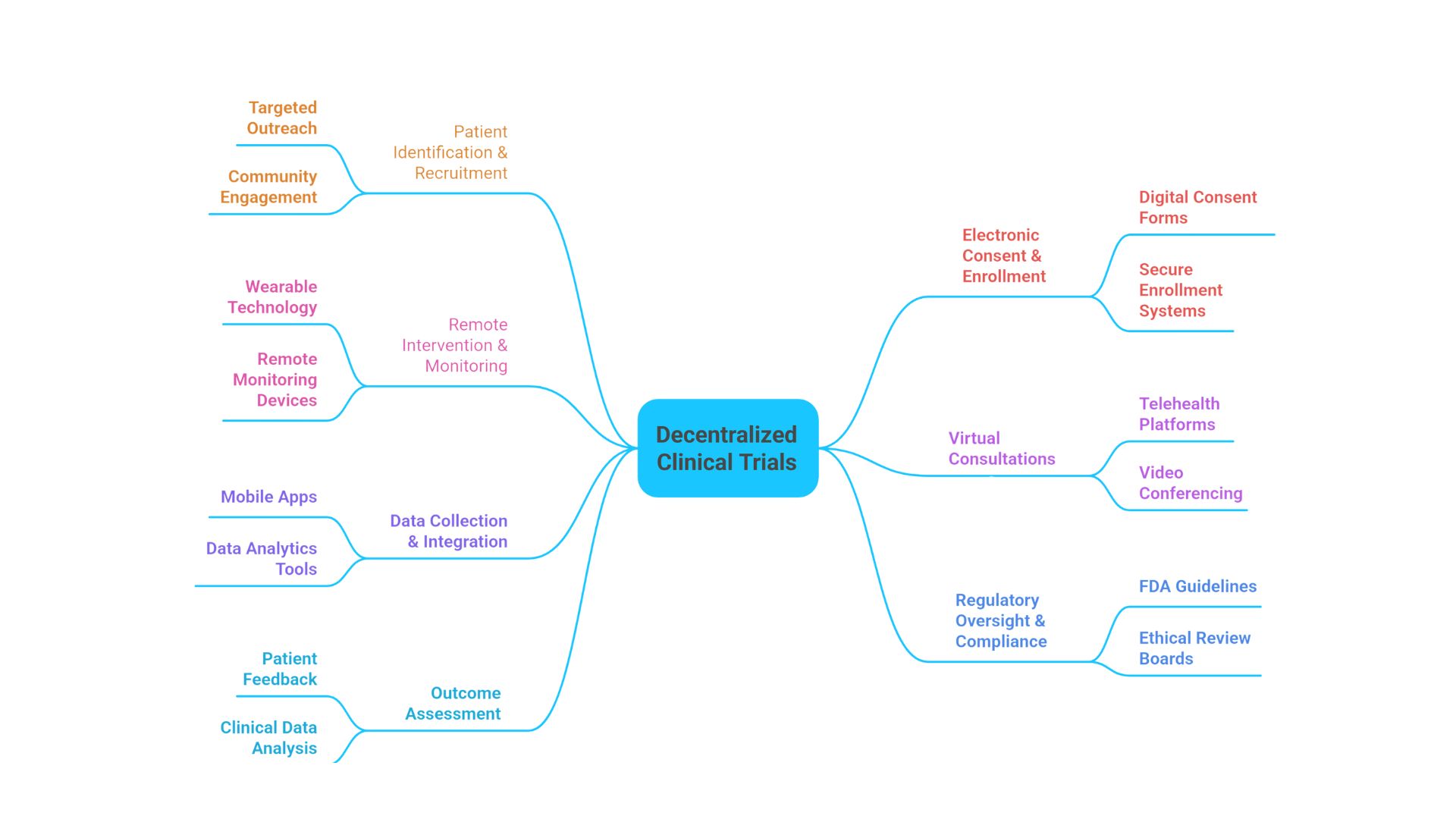
Modern hybrid and decentralized trials incorporate critical elements such as virtual consultations, remote monitoring, electronic patient-reported outcomes (ePRO), and home-based testing. By integrating these components, trials reduce dependency on traditional sites, enhance patient convenience, and ensure consistent, high-quality data capture. Strategic deployment of these decentralized elements allows sponsors to balance flexibility, efficiency, and regulatory compliance.
Hybrid and decentralized trials expand beyond conventional clinical sites to include patients’ homes, local clinics, pharmacies, and mobile healthcare units. This distributed model improves recruitment diversity, increases patient retention, and reduces logistical constraints. Thoughtful planning of trial locations ensures accurate data collection, seamless coordination, and adherence to global regulatory standards, delivering scalable, patient-centric trial outcomes.
Hybrid and decentralized clinical trials (DCTs) are redefining the landscape of clinical research by leveraging digital health technologies, remote monitoring, and patient-centric approaches. These trials enhance accessibility, improve patient engagement, accelerate timelines, and optimize operational efficiency. ProRelix Research harnesses these innovative strategies to deliver seamless and efficient hybrid and decentralized clinical trial solutions.
Enhanced Patient Accessibility is achieved by enabling remote participation, which reduces geographical and logistical barriers and allows a more diverse and representative patient population to enroll in clinical studies.
Improved Patient Engagement and Retention is fostered through real-time monitoring, telehealth consultations, and home-based assessments, which enhance communication and adherence, resulting in higher retention rates throughout the study.
Accelerated Trial Timelines are realized via digital data capture and remote assessments that streamline processes, reduce site visits, and minimize administrative delays, significantly shortening the overall trial duration.
Operational Efficiency and Cost Optimization are accomplished by minimizing the need for physical sites and staff, reducing overhead costs while maintaining high-quality data standards and regulatory compliance.
Real-World Data Integration is enabled through continuous remote monitoring and wearable devices, allowing the collection of rich, real-world data and offering deeper insights into patient outcomes and treatment efficacy.
ProRelix Research delivers advanced hybrid and decentralized clinical trial (DCT) services designed to modernize study execution through digital innovation and patient-centric models. By integrating remote technologies, virtual workflows, and global regulatory alignment, ProRelix Research enables faster enrollment, real-time data capture, and high-quality outcomes across diverse therapeutic areas.
ProRelix Research designs scientifically robust DCT and hybrid protocols by embedding virtual visits, telemedicine consultations,& remote outcome assessments. These designs enhance patient accessibility, reduce protocol deviations, & Ensure seamless integration with site-based components while maintaining rigor.
Using advanced digital outreach, targeted patient identification, and secure eConsent platforms, ProRelix Research improves recruitment speed & patient diversity. Continuous engagement through mobile reminders, virtual support, & education tools enhances adherence, minimizes dropouts, & strengthens overall trial experience.
ProRelix Research leverages wearable technologies, electronic patient-reported outcomes (ePRO), & connected devices to enable real-time, high-quality data capture. Centralized remote monitoring ensures early risk detection, protocol compliance, & proactive issue resolution across geographically dispersed populations.
ProRelix Research manages a global network of highly trained mobile healthcare professionals, delivering patient-centric home care for vitals, drug administration, sample collection, and adverse event assessments, with digital systems ensuring protocol adherence, quality, and increased participation.
All decentralized operations are supported by validated digital platforms compliant with FDA, EMA, and ICH-GCP guidelines. ProRelix Research ensures data security, audit readiness, and end-to-end transparency, enabling sponsors to confidently adopt hybrid and decentralized models for global clinical development.
ProRelix Research provides continuous remote support, scheduled virtual check-ins, & advanced digital communication tools to improve patient engagement, adherence, satisfaction, & overall clinical trial experience. Personalized guidance, real-time feedback, & proactive issue resolution support participants throughout the study.
Hybrid and decentralized clinical trials (DCTs) are driven by an advanced digital ecosystem that enables remote study execution while maintaining scientific rigor and regulatory compliance. By combining secure data platforms, real-time patient monitoring, & intelligent trial management tools, ProRelix Research delivers scalable decentralized & hybrid trial solutions, supported by purpose-built digital technologies such as ProCTTH.
ProRelix Research leverages the secure, cloud-based eClinical and EDC platform ProCTTH to centralize trial data, enable real-time remote monitoring, and ensure seamless data integration across decentralized & hybrid trial environments.
Secure telehealth solutions integrated within ProRelix Research’s hybrid and decentralized framework allow virtual investigator–participant interactions, reducing site dependency while supporting protocol adherence and global patient access.
Through validated wearable technologies and connected devices, ProRelix Research enables continuous, high-quality real-world data capture, improving endpoint reliability and patient compliance outside traditional clinical sites.
Electronic informed consent platforms and patient engagement solutions implemented by ProRelix Research enhance participant understanding, retention, and transparency while maintaining full regulatory traceability.
Integrated DtP systems support investigational product delivery, home nursing visits, and remote sample collection, reducing patient burden while preserving integrity, data continuity, regulatory compliance, and operational transparency.
ProCTTH, ProRelix Research’s hybrid and decentralized clinical trial application, acts as a centralized digital layer connecting patients, sites, and sponsors. It supports remote data capture, visit scheduling, patient engagement, and operational oversight, enabling seamless coordination across decentralized trial components.
ProRelix Research incorporates AI-driven analytics and risk-based monitoring to identify data trends, detect protocol deviations early, and optimize trial performance across geographically distributed populations.
Robust cybersecurity frameworks, including encryption, access controls, and compliance with global data protection regulations, ensure patient confidentiality and regulatory acceptance throughout decentralized trial lifecycles.
Hybrid and decentralized clinical trials (DCTs) guidance defines the regulatory and operational framework for conducting patient-centric research using digital, remote, and hybrid methodologies. Global regulators now recognize decentralized models as viable alternatives to traditional trials, provided data integrity, participant safety, and quality oversight are consistently maintained.Within this evolving regulatory landscape, ProRelix Research supports sponsors by aligning decentralized and hybrid trial designs with global guidance and compliance expectations. Through robust governance, validated digital technologies, and regulatory-ready processes, ProRelix Research enables confident adoption of decentralized clinical trial models worldwide.
FDA guidance on decentralized clinical trials outlines how telemedicine, eConsent, wearable devices, and remote data collection can be incorporated into compliant study designs, ensuring patient safety, data accuracy, and regulatory acceptance.
Hybrid and Decentralized Clinical Trials FDA expectations emphasize risk-based monitoring, investigator oversight, validation of digital health technologies, secure data management, and audit-ready documentation across decentralized and hybrid trials.
The Hybrid and Decentralized Clinical Trials EMA framework supports flexible trial execution across EU member states, focusing on protocol justification, GDPR compliance, source data verification, and consistent oversight of remote trial activities
Global Regulatory Fit for Decentralized & Hybrid Trials enables sponsors to implement standardized operating models across regions, supporting multinational studies with harmonized quality, compliance, and data governance standards.
ICH E6(R2 & R3) Good Clinical Practice provides the global foundation for decentralized trials, reinforcing risk-based quality management, vendor oversight, data integrity, and patient protection irrespective of trial design.
MHRA Guidance on Hybrid and Decentralized Trials (UK) clarifies expectations for remote consent, direct-to-patient IMP delivery, telemedicine visits, and sponsor–investigator responsibilities within the UK regulatory framework.
Health Canada guidance on decentralized and virtual trials outlines requirements for virtual visits, remote monitoring, privacy safeguards, and validated digital systems to support compliant decentralized trial execution.
PMDA guidance on digital and decentralized trials encourages the adoption of digital health technologies, with a strong emphasis on system validation, data reliability, and participant safety.
WHO guidance on digital health interventions for research supports the ethical and effective use of digital technologies in clinical trials, promoting accessibility, data governance, and patient-centric research models globally.
Regulatory acceptance of hybrid and decentralized clinical trials (DCTs) has expanded significantly as global health authorities recognize their ability to enhance patient access, data continuity, & trial efficiency without compromising scientific rigor. Agencies such as the FDA, EMA, MHRA, & ICH now acknowledge decentralized & hybrid models, provided that participant safety, data integrity, & audit readiness are demonstrably maintained across all trial activities.
Regulators across the FDA, EMA, MHRA, and Asia–Pacific regions increasingly support decentralized and hybrid trials, enabling broader patient access while maintaining consistent global quality and oversight standards.
Although aligned with ICH-GCP principles, regional rules differ for data privacy, telemedicine, IMP logistics, and digital health tools, requiring localized regulatory compliance strategies.
Strong compliance depends on validated digital systems, secure data governance, qualified vendors, and risk-based monitoring to ensure audit readiness and regulatory confidence.
Sponsors retain full accountability for participant safety, data quality, vendor management, and regulatory reporting across all decentralized trial activities.
The adoption of hybrid and decentralized clinical trials (DCTs) is rapidly increasing globally, with hybrid and fully remote designs transforming clinical research. According to industry insights from Informa, DCTs are now widely implemented across therapeutic areas, leveraging digital endpoints and remote monitoring to improve efficiency. The number of hybrid and decentralized clinical trials continues to grow, reflecting their ability to enhance patient recruitment, retention, and data quality. In India, decentralized clinical trials in India are expanding due to robust clinical infrastructure, digital adoption, and regulatory support, providing sponsors access to diverse populations while maintaining global compliance standards.
Hybrid and decentralized clinical trials (DCTs) are transforming clinical research by enabling remote patient participation, leveraging digital health technologies, and minimizing reliance on traditional site visits. These trials enhance accessibility, accelerate data collection, and improve patient engagement while ensuring regulatory compliance. Organizations like ProRelix Research are at the forefront of implementing these innovative trial models, often utilizing platforms such as ProCTTH to optimize hybrid decentralized approaches.
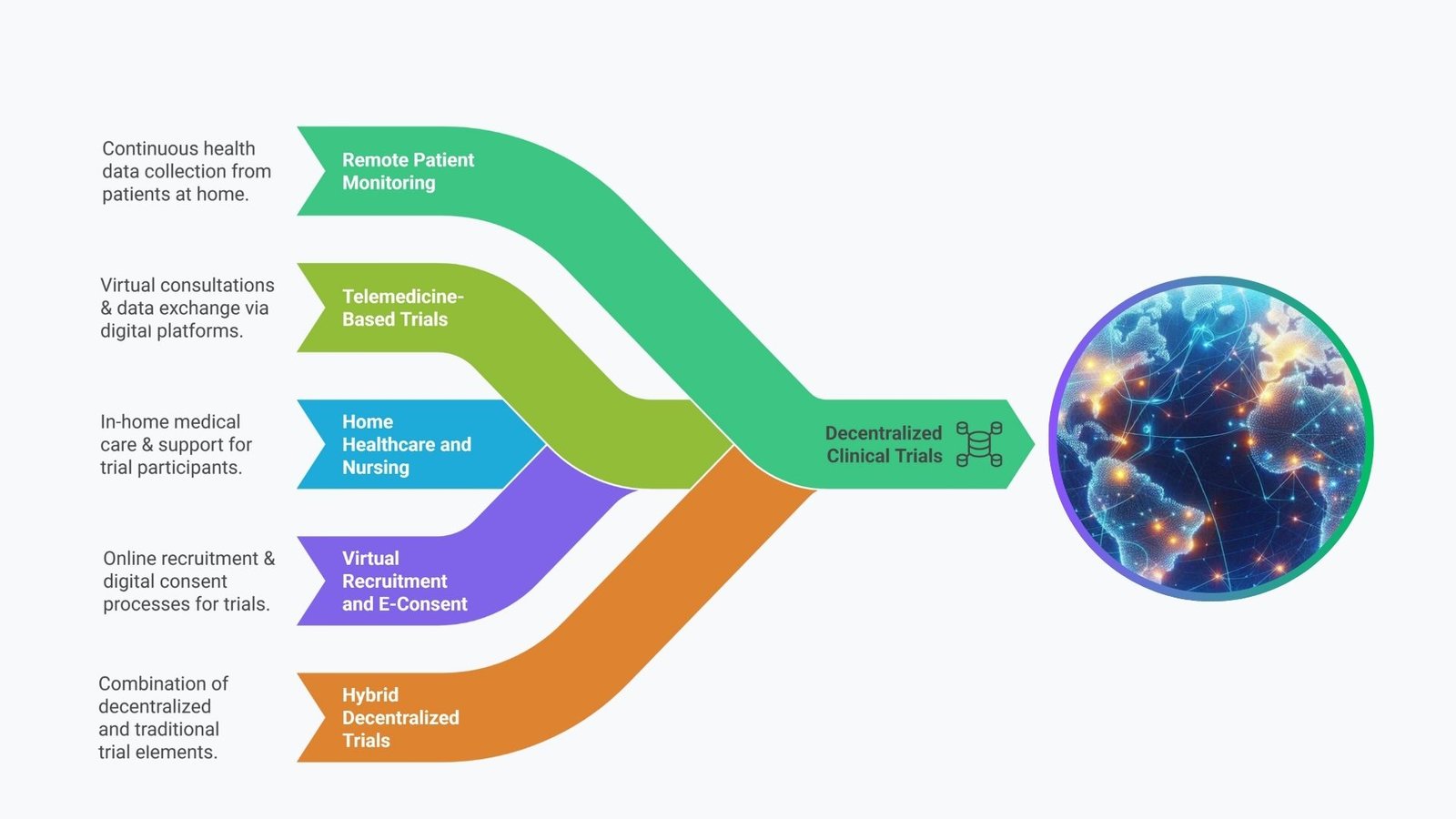
Trials using wearable devices and mobile apps to capture patient vitals, activity, and treatment responses in real time, reducing the need for frequent site visits.
Studies where consultations, follow-ups, and assessments are conducted via secure video calls, expanding geographic reach and patient convenience.
Interventions administered at patients’ homes by trained healthcare professionals, enabling personalized care while maintaining strict protocol adherence.
Trials leveraging online platforms for patient recruitment, e-consent, and digital documentation, shortening enrollment timelines and simplifying administration.
Combining traditional site visits with remote monitoring, telehealth, and home-based assessments, providing protocol flexibility and ensuring high-quality data.
Hybrid and Decentralized Clinical Trial companies are redefining clinical research by enabling remote, hybrid, and patient-centric study models that enhance accessibility, efficiency, and data quality. These companies leverage digital technologies, telemedicine, wearable devices, and advanced eClinical platforms to streamline recruitment, monitoring, and real-time data collection while ensuring regulatory compliance across global markets. Among the leading players, ProRelix Research stands out by offering end-to-end hybrid and decentralized trial solutions, integrating innovative tools like ProCTTH to optimize patient engagement, simplify study logistics, and accelerate trial timelines without compromising quality.
Hybrid and decentralized clinical trials (DCTs) offer unparalleled patient-centricity, operational flexibility, and accelerated timelines. However, they introduce unique complexities in data integrity, regulatory adherence, and participant engagement. Effective risk management strategies are essential to ensure trial success while maintaining compliance and quality standards. ProRelix Research addresses these challenges with advanced hybrid and decentralized trial frameworks, combining innovative digital tools, compliance expertise, and risk management strategies. Their solutions, along with platforms like ProCTTH, ensure smooth, patient-centric, and compliant trial execution.
Ensuring accuracy, consistency, and security of data collected remotely is critical. DCTs rely on digital platforms, wearables, and home-based assessments, which necessitate strong encryption, real-time monitoring, and audit-ready systems.
Diverse regional regulations and guidelines pose challenges for global trials. Sponsors must ensure adherence to local and international standards, including FDA, EMA, and ICH-GCP, while maintaining inspection readiness.
While DCTs expand access, maintaining engagement and adherence remotely can be difficult. Personalized communication, virtual support, and digital reminders are vital to reduce dropout rates.
Seamless integration of telemedicine, mobile apps, electronic patient-reported outcomes (ePRO), and wearable devices is essential. System failures, connectivity issues, or interoperability gaps can disrupt trial timelines.
Remote monitoring limits direct observation of participants and site processes. Sponsors must implement risk-based monitoring, real-time dashboards, and robust reporting mechanisms to ensure compliance and safety.

Hybrid and decentralized clinical trials (DCTs) are transforming drug development, requiring CROs to integrate advanced digital technologies, remote monitoring, and telemedicine while ensuring global regulatory compliance. Efficient data management, secure eConsent, and risk mitigation are essential to maintain trial integrity and patient safety. Scalable operations, real-time analytics, and adaptive study designs enhance participant engagement and accelerate timelines. Leading CROs like ProRelix Research demonstrate their capabilities for hybrid and decentralized clinical trials by delivering seamless digital integration, robust operational oversight, and patient-centric solutions tailored to complex study needs. ProRelix Research offers end-to-end hybrid and decentralized trial solutions, combining digital expertise, patient-focused approaches, and global compliance to deliver high-quality data and efficient execution. Leveraging cutting-edge platforms and experienced teams, we optimizes trial efficiency, shortens timelines, and ensures superior regulatory readiness.

A DCT is a patient-centric clinical study using digital technologies, telemedicine, and remote monitoring to conduct trials outside traditional research sites, improving access and efficiency. Platforms like ProCTTH enhance remote data collection and patient engagement.
Centralized trials require participants to visit physical sites, while decentralized trials use remote technologies to collect data, enabling wider participation and greater flexibility.
Hybrid Clinical Trials combine traditional site-based study visits with decentralized elements such as telemedicine, remote monitoring, home healthcare visits, and digital data capture.
DCTs are rapidly increasing, especially post-2020, as sponsors adopt hybrid and fully decentralized models. Organizations like ProRelix Research are leading in implementing these patient-centric models worldwide.
DCTs rely on eConsent, telehealth, wearable devices, electronic patient-reported outcomes (ePRO), and secure data platforms to ensure real-time monitoring and compliance.
Hybrid trials must comply with Good Clinical Practice (GCP), data privacy regulations like GDPR, and 21 CFR Part 11 for electronic records and signatures. Regulators support innovation in trial models, provided patient safety, data integrity, and ethical standards are strictly maintained.
The benefits of decentralized/hybrid clinical trials include improved patient access and retention, faster recruitment, enhanced data quality through real-world evidence, reduced site burden, and greater overall trial efficiency.
Yes, global regulatory bodies like the FDA, EMA, and ICH provide guidance for DCTs, emphasizing patient safety, data integrity, and compliance with GCP standards.
Hybrid clinical trials use technologies like Electronic Consent (eConsent), Electronic Patient-Reported Outcomes (ePRO), wearable and remote monitoring devices, telemedicine platforms, and cloud-based Clinical Trial Management Systems (CTMS). These tools enable real-time data capture while ensuring compliance, efficiency, and proper oversight throughout the study.
Decentralized/hybrid clinical trials allow eligible patients, healthy volunteers, caregivers, and investigators to participate remotely, improving access for diverse and underserved populations.
The main challenges in decentralized/hybrid clinical trials include technology access, data security and privacy, regulatory variability, patient compliance, and consistent data quality; tools like ProCTTH help streamline operations and enhance patient compliance.
Yes. In practice, many decentralized trials are hybrid clinical trials, combining remote activities (eConsent, tele-visits, home health) with selected in-clinic visits for assessments requiring on-site infrastructure.
Hybrid trials are no longer a temporary solution; they are becoming a strategic standard in clinical research. As digital health technologies evolve and regulators support innovation, hybrid models combine flexibility, compliance, and patient-centricity—positioning them to lead the future of clinical trial design.
Bringing a new therapy, device, or health product to market isn’t just about research; it’s about reducing risk, accelerating timelines, and ensuring regulatory confidence. With full-spectrum clinical trial solutions, we help business leaders turn ambitious concepts into market-ready innovations while safeguarding quality and compliance.

Be the first to know the latest trends in clinical research, real-world case studies, and industry secrets.

ProRelix Research is the rapidly growing Contract/ Clinical Research Organization (CRO) with multi-country service capability supporting phase 1, 2, 3, & 4 clinical trials of Pharma, Biotech, Biopharma, Medical Device, Nutraceutical & Herbal companies to conduct in the USA, India, Europe & South East Asia.


