


ProRelix Research offers all phases Autoimmune and Inflammation Clinical Trial services in the USA and India, supporting all trial phases with robust study design, immunology endpoints, compliant protocol development, and regulatory guidance. Our patient-centric strategies ensure reliable outcomes for global autoimmune disease studies.
Autoimmune & inflammation clinical trials are systematic research studies designed to evaluate the safety, efficacy, and immune-modulating effects of investigational therapies that target dysregulated immune responses and chronic inflammatory pathways underlying autoimmune disorders. The scope of autoimmune disease studies continues to expand with the growing prevalence of immune-mediated conditions. Immunology clinical trials enable precise evaluation of biologics and immunotherapies, while immunology and inflammation research supports modern drug development by advancing biomarker-driven, patient-centric, and disease-modifying treatment strategies.
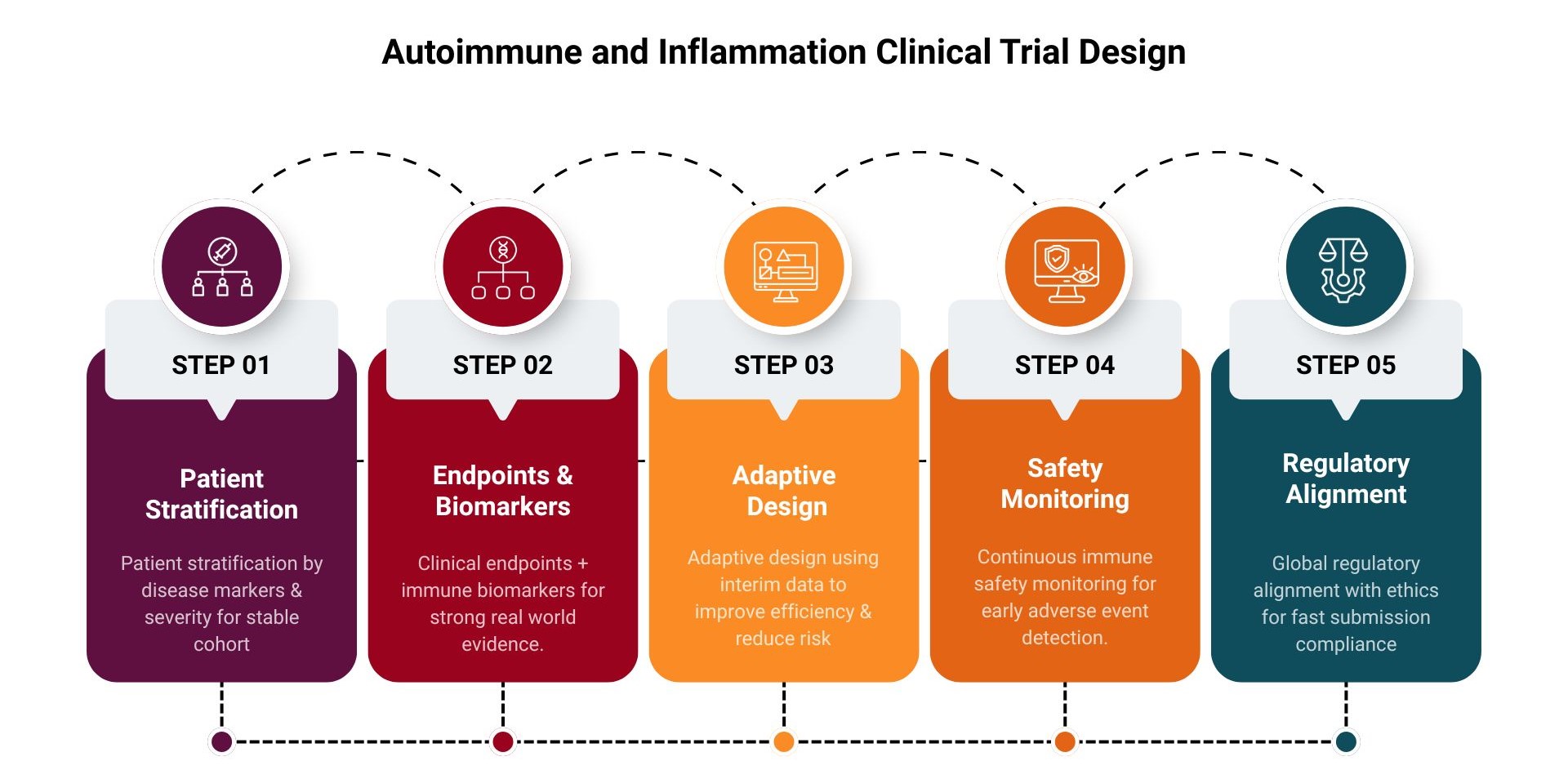
Autoimmune and inflammation clinical trial design requires a precise, mechanism-driven approach to evaluate complex immune pathways and heterogeneous patient populations. These studies emphasize adaptive protocols, robust biomarker strategies, and clinically meaningful endpoints to accurately assess therapeutic impact. Well-structured designs enable early signal detection while maintaining scientific rigor across development phases. ProRelix Research supports sponsors with integrated expertise in designing immunology clinical trials that balance regulatory expectations with patient-centric methodologies. By aligning innovative study frameworks with global compliance standards, it enables efficient development of advanced autoimmune disease treatments across diverse indications.
Careful selection based on disease subtype, immune markers, and severity ensures homogenous cohorts, improving signal clarity in immunology clinical trials and optimizing therapeutic evaluation.
Trials incorporate validated clinical endpoints alongside immunological and inflammatory biomarkers to demonstrate both symptomatic improvement and disease-modifying effects of autoimmune disease treatments.
Adaptive methodologies allow protocol modifications based on interim data, enhancing efficiency and reducing development risk while preserving statistical integrity.
Continuous immunological safety surveillance is essential to identify immune-related adverse events early, ensuring patient safety throughout the trial lifecycle.
Designs are structured to meet global regulatory expectations, supporting seamless submissions while maintaining ethical oversight in complex autoimmune and inflammation studies.

Autoimmune and inflammatory pathways play a critical role in cancer progression, immune response, and treatment outcomes, making them essential considerations in modern oncology research. Immune dysregulation can influence tumor growth, immune escape, and therapy resistance, while chronic inflammation in the tumor microenvironment can drive disease progression and impact response to treatment. Integrating immunology and oncology insights enables biomarker-driven patient selection, optimized treatment sequencing, and improved safety profiles for immune-based therapies.
ProRelix Research brings specialized expertise in managing autoimmune and inflammation clinical trials in oncology, supporting sponsors with rigorous protocol design, robust safety monitoring, and seamless regulatory alignment to advance innovative cancer therapies.
These trials primarily assess safety, dosing, and preliminary efficacy of novel cancer treatments, including targeted therapies and immunotherapies. They often enroll patients with advanced or refractory cancers who may benefit from investigational options.
Designed to confirm effectiveness and compare new therapies against the current standard of care, late-phase oncology trials provide definitive evidence for regulatory approval and clinical adoption. Phase IV studies further monitor long-term safety in real-world settings.
Modern oncology trials increasingly focus on genetic and molecular biomarkers to match patients with therapies most likely to benefit them. This approach enhances treatment personalization and improves response rates in specific cancer subtypes.
Many current clinical trials for cancer patients explore combinations of immunotherapy, chemotherapy, targeted agents, and radiation to achieve synergistic effects and overcome resistance. These trials help identify optimal regimens and sequencing strategies.
Oncology trials also investigate interventions that manage symptoms, reduce side effects, and improve overall patient well-being. These studies are crucial for enhancing treatment tolerability and long-term survivorship.
Autoimmune diseases occur when the immune system mistakenly attacks healthy tissues, leading to chronic inflammation and multi-organ impact. While the exact autoimmune disease causes vary, genetic predisposition, environmental triggers, and immune dysregulation are commonly implicated. Globally, the autoimmune disease prevalence is rising, driven by improved diagnostics and lifestyle changes. This evolving landscape demands innovative research and robust clinical frameworks to support next-generation therapies.
ProRelix Research supports sponsors with expert clinical trial services in autoimmune and inflammatory disorders, including specialized rare disease clinical trials. We strengthen the research foundations of autoimmune drug development through scientific trial design, biomarker strategy, and regulatory alignment, ensuring efficient progression from research to real-world impact.
Research highlights a complex interplay of genetic factors, infections, environmental triggers, and immune dysregulation, all contributing to disease onset and progression.
Epidemiological studies show a growing prevalence across age groups and regions, emphasizing the urgent need for better diagnostics and long-term patient monitoring.
Advances in immunogenomics, biomarkers, and precision medicine are reshaping the field, enabling targeted therapies and more accurate patient stratification.
Emerging treatment modalities, including biologics, small molecules, and cell-based therapies, are transforming patient outcomes and expanding therapeutic options.
The scientific study of autoimmune disorders is known as autoimmunology, focusing on immune mechanisms, disease pathways, and translational research.
Many autoimmune conditions fall under rare disease categories, requiring specialized trial designs, patient recruitment strategies, and regulatory expertise to ensure meaningful results.
ProRelix Research offers expert-led autoimmune and inflammation clinical trial services with global reach, ensuring scientific rigor, regulatory compliance, and patient-centric execution. Our expertise spans complex immunology clinical trials, where precise study design, robust data management, and meticulous safety monitoring are critical. We support sponsors across all phases of development, helping translate innovative therapies into meaningful clinical outcomes.
We craft scientifically robust protocols tailored for autoimmune or inflammation clinical trials, ensuring clear endpoints, optimized patient inclusion criteria, and efficient study flow. Our approach aligns with global regulatory expectations and therapeutic best practices.
ProRelix Research manages global regulatory submissions and ethics committee approvals for immunology clinical trials, ensuring timely clearance and compliance across regions. Our team navigates complex regulatory pathways to reduce delays and enhance study feasibility.
We conduct comprehensive site feasibility assessments and select high-performing sites with proven patient access for autoimmune and inflammation trials. Our site network and analytics-driven feasibility ensure faster enrollment and improved study timelines.
Leveraging targeted recruitment strategies, we enhance patient enrollment and retention for immunology clinical trials, ensuring diversity and adherence. Our patient-centric approach improves trial experience and minimizes dropout rates.
Our clinical operations team ensures high-quality execution across all phases, supported by risk-based monitoring and real-time oversight. We maintain strict adherence to protocols and ensure data integrity throughout the trial lifecycle.
We provide expert data management and statistical services, including database design, validation, and analysis for autoimmune or inflammation clinical trials. Our experts ensure clean datasets and reliable statistical outputs for regulatory submissions.
We deliver proactive safety monitoring and pharmacovigilance support for immunology clinical trials, ensuring timely reporting and risk mitigation. Our team ensures patient safety is prioritized at every stage of the study.
From study reports to clinical study protocols, our medical writing team produces high-quality documentation that supports global submissions. We ensure accuracy, clarity, and alignment with regulatory standards for autoimmune and inflammation clinical trials.
Designing a robust regulatory strategy for autoimmune clinical trials requires alignment with global standards, especially when planning multi-regional studies. Sponsors must ensure compliance with FDA, EMA, and CDSCO expectations, including protocol rigor, patient safety, and transparent reporting. A strategic approach also considers adaptive trial designs, biomarkers, and real-world evidence to support regulatory approval and post-market surveillance.
ProRelix Research brings extensive expertise in navigating regulatory pathways for autoimmune disease studies across the US, EU, and India. Their regulatory specialists ensure alignment with local and global requirements, enabling efficient submissions and high-quality trial execution.
Ensure harmonization of trial design and documentation to meet FDA, EMA, and CDSCO requirements, reducing the risk of regulatory delays and enabling smoother multi-region approvals.
Define clinically meaningful endpoints, including patient-reported outcomes and biomarker-driven measures, to demonstrate therapeutic benefit in autoimmune disease studies.
Implement comprehensive safety oversight with proactive adverse event reporting and risk mitigation strategies, especially in rare disease clinical trials with limited patient populations.
Leverage adaptive designs, Bayesian models, and decentralized trial elements to enhance feasibility and data quality while meeting regulatory expectations.
Ensure high-quality data collection and robust documentation to support IND/CTA submissions, and to streamline the regulatory review process across FDA, EMA, and CDSCO.
Facilitate early and ongoing engagement with regulatory authorities through pre-IND, scientific advice, and end-of-phase meetings to de-risk development, align on expectations, and accelerate approval pathways for autoimmune clinical trials.
CAR T cell therapy is a breakthrough immunotherapy where a patient’s own T cells are engineered to recognize and eliminate disease-causing cells. Initially successful in oncology, this technology is now being explored in autoimmune conditions to reset immune tolerance and reduce pathogenic immune activity. Current clinical trials focus on safety, optimal dosing, and long-term immune modulation, using advanced biomarkers and patient-centric endpoints to demonstrate meaningful clinical benefits. As the field advances, CAR T cell therapy autoimmune research is gaining momentum, especially for severe and treatment-resistant disorders where conventional therapies fail. These trials could redefine treatment for refractory autoimmune diseases with durable remission. ProRelix Research supports sponsors with full-spectrum CAR T cell therapy clinical trial services, from study design and regulatory strategy to site selection and trial execution, enabling efficient delivery of CAR T cell therapy lupus clinical trials and other advanced cell therapy initiatives.

Autoimmune and inflammatory diseases involve complex immune dysregulation, leading to chronic symptoms and progressive tissue damage. Clinical trials in these therapeutic areas focus on targeted interventions that restore immune balance, reduce inflammation, and improve long-term outcomes. These studies often incorporate advanced biomarkers, patient-reported outcomes, and robust safety monitoring to ensure both efficacy and tolerability.
ProRelix Research provides strategic oversight for seamless clinical trial execution across autoimmune and inflammatory indications, delivering deep expertise in protocol design, regulatory strategy, site selection, and data management. Our global team upholds scientific rigor & ensures patient-centric delivery across the entire study lifecycle, enabling reliable data generation & regulatory-ready outcomes.
These trials evaluate therapies aimed at immune modulation and skin restoration. Clinical trials for vitiligo focus on repigmentation and disease stability, while eczema clinical trials emphasize reducing inflammation and improving skin barrier function.
Clinical studies in this area assess immunosuppressive and novel targeted treatments to control liver inflammation and prevent disease progression. Autoimmune hepatitis clinical trials prioritize liver function stabilization and long-term disease remission.
These trials evaluate therapies that reduce intestinal inflammation and achieve sustained remission. Ulcerative colitis clinical trials focus on mucosal healing, symptom control, and improving patient quality of life through advanced endpoints and biomarkers.
Migraines are increasingly understood as involving neuroinflammatory pathways, making targeted treatments essential. Migraine clinical trials assess novel therapies that reduce attack frequency, severity, and disability burden through precise endpoints and patient-centric measures.
Rare disease clinical trials demand a highly specialized and adaptive approach due to small patient populations, diverse disease phenotypes, and limited natural history data. Sponsors must design innovative trial models such as adaptive designs, basket trials, and real-world evidence integration to optimize statistical power while ensuring robust scientific validity. Regulatory engagement is crucial early on, as authorities often require bespoke endpoints, accelerated pathways, and flexible data strategies. Additionally, patient-centricity is vital, with close collaboration with patient advocacy groups to improve recruitment, retention, and meaningful outcome measurement.
With a strong track record in rare disease research, ProRelix Research offers customized clinical trial management, expert regulatory support, and strategic site and patient engagement solutions. Their specialized teams ensure rigorous data quality, streamlined operations, and patient-focused execution to help accelerate development timelines while maintaining compliance and safety standards.
Autoimmune hepatitis is a chronic immune-mediated liver disorder marked by persistent inflammation and progressive liver damage. Clinical trials in this field focus on evaluating innovative immunosuppressive and targeted therapies, optimizing dosing regimens, and identifying predictive biomarkers to improve long-term outcomes. These studies emphasize rigorous safety monitoring, standardized endpoints, and comprehensive data collection to support regulatory approval and clinical adoption.
With deep expertise in autoimmune and hepatic research, ProRelix Research collaborates with sponsors to design and execute clinical trials for autoimmune hepatitis, ensuring accurate patient stratification, efficient site management, and compliance with global regulatory standards. Their clinical operations team supports seamless study delivery and high-quality data generation for successful submissions
Latest research on autoimmune diseases is reshaping the understanding of autoimmune conditions by uncovering the complex immune pathways that drive chronic inflammation and tissue damage. Advances in immunology, genomics, and biomarker science are enabling earlier disease characterization, improved patient stratification, and more precise endpoint selection across autoimmune indications. These insights are critical for designing targeted, mechanism-driven studies that address unmet clinical needs.
Parallel to these discoveries, new treatment strategies are emerging that move beyond broad immunosuppression toward immune modulation and pathway-specific intervention. Innovative biologics, small molecules, and advanced cell-based approaches are being evaluated to improve efficacy, durability of response, and long-term safety. Clinical trials increasingly focus on personalized therapies, disease-modifying outcomes, and real-world relevance to support regulatory and market expectations.
Within this evolving landscape, ProRelix Research applies deep therapeutic expertise to translate scientific innovation into well-structured autoimmune clinical trials. By integrating the latest research insights with robust study design, adaptive methodologies, and regulatory-aligned execution, we help advance novel autoimmune treatments from early development through late-phase evaluation.
Effective patient recruitment and rigorous site feasibility are essential for successful autoimmune disease studies, as these conditions involve complex diagnostics and variable disease progression. A well-designed feasibility assessment confirms that sites have the required patient pool, expertise, and infrastructure to meet timelines. Proactive recruitment and patient-centric support help reduce enrollment delays and improve retention.
ProRelix Research supports sponsors with detailed site feasibility evaluations and tailored recruitment plans, ensuring timely enrollment and high-quality data delivery across challenging autoimmune trials.
Evaluating investigator experience, patient availability, diagnostic capabilities, and site infrastructure to confirm readiness for autoimmune disease studies.
Leveraging targeted outreach, patient advocacy networks, and digital engagement to identify eligible participants and enhance enrollment in both interventional and non drug clinical trials.
Implementing patient-friendly scheduling, regular communication, and support programs to reduce dropout rates and ensure long-term study compliance.
Providing continuous site training on protocol requirements, eligibility criteria, and data quality expectations to ensure consistent trial execution.
Autoimmune and inflammation clinical trials require precise scientific planning, patient-centric design, and strict regulatory compliance. These studies often involve complex immune mechanisms, variable patient populations, and evolving clinical endpoints, making specialized expertise essential. Successful trials rely on integrated clinical operations, biomarker support, and proactive safety management. ProRelix Research provides high-quality Autoimmune & Inflammation Clinical Trials services, helping sponsors navigate study setup, execution, and regulatory requirements with strong data integrity and efficient timelines.
Autoimmune biomarkers are measurable indicators such as autoantibodies, cytokines, or genetic signatures that reveal disease presence, activity, and progression. They help differentiate similar inflammatory conditions, stratify patients, and predict treatment response, supporting personalized therapy and improved clinical outcomes. In clinical trials, biomarkers strengthen endpoint selection, validate mechanisms, and enhance data quality, accelerating regulatory pathways. ProRelix Research integrates biomarker strategy into autoimmune studies through validated assays, standardized sample handling, and robust data capture, enabling sponsors to generate reliable evidence and drive meaningful clinical insights.
Innovative trial models are transforming how therapies are evaluated, especially where traditional drugs may not be ideal. Non-drug clinical trials include medical devices, lifestyle interventions, nutraceuticals, and digital therapeutics, generating real-world evidence with flexible designs and patient-centric endpoints. In immunology and inflammation research, these approaches help explore immune modulation beyond pharmacology and support personalized treatment strategies. ProRelix Research collaborates with sponsors to orchestrate non-drug clinical studies with scientific precision, overseeing trial design, operational oversight, and compliance frameworks that support credible results. Anchored in rigorous data governance and international regulatory standards, ProRelix Research facilitates smooth and consistent trial conduct across global development landscapes.
Autoimmune or inflammation clinical trials are structured research studies that evaluate the safety, efficacy, and mechanisms of therapies targeting dysregulated immune responses and chronic inflammatory pathways.
Diseases covered in autoimmune clinical trials include rheumatoid arthritis, systemic lupus erythematosus, multiple sclerosis, inflammatory bowel disease, psoriasis, and autoimmune hepatitis.
Autoimmune clinical trials are typically designed as randomized, controlled studies with defined clinical endpoints, biomarker integration, and long-term safety and efficacy assessments.
Biomarkers are important in inflammation clinical trials because they enable accurate measurement of immune activity, treatment response, disease progression, and patient stratification.
Autoimmune clinical trials usually last from several months to multiple years, depending on disease complexity, therapeutic modality, and long-term outcome evaluation.
Patient safety in inflammation trials is ensured through strict protocol adherence, continuous safety monitoring, ethics oversight, and global GCP compliance, with CROs like ProRelix Research supporting regulatory-aligned trial oversight.
Sponsors can improve recruitment for autoimmune trials through strong feasibility planning, patient-centric designs, and experienced site networks, supported by CROs such as ProRelix Research.
Regulatory standards that apply to autoimmune clinical trials include ICH-GCP guidelines, local regulatory authority requirements, ethics committee approvals, and data integrity regulations.
Therapeutic expertise is critical in inflammation drug development to ensure appropriate endpoint selection, biomarker relevance, risk management, and successful regulatory outcomes.
If you are planning to develop novel treatments in any therapeutic area, it’s time to consult a CRO that delivers rigor, efficiency, and regulatory clarity at every stage. Let’s position your therapy for global markets.

Be the first to know the latest trends in clinical research, real-world case studies, and industry secrets.

ProRelix Research is the rapidly growing Contract/ Clinical Research Organization (CRO) with multi-country service capability supporting phase 1, 2, 3, & 4 clinical trials of Pharma, Biotech, Biopharma, Medical Device, Nutraceutical & Herbal companies to conduct in the USA, India, Europe & South East Asia.