



Explore CDISC standards evolution supporting global data interoperability, regulatory compliance, SDTM, ADaM, and seamless clinical data exchange worldwide.
Introduction
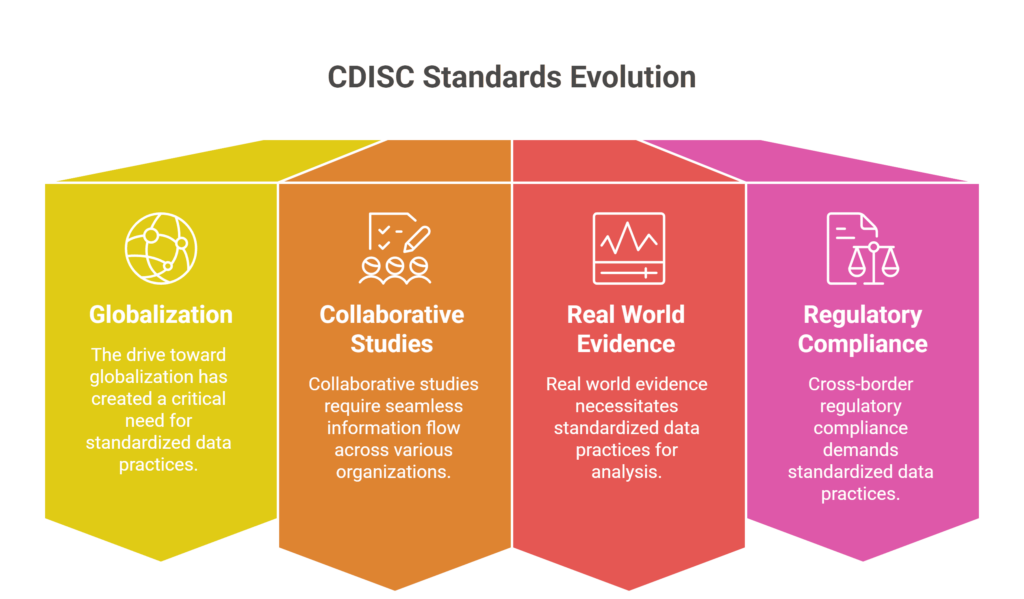
The landscape of clinical research has undergone a profound transformation over the last two decades. The drive toward globalization, collaborative studies, real world evidence, and cross-border regulatory compliance has created a critical need for standardized data practices. Clinical research no longer exists in silos. Information must flow seamlessly across clinical sites, sponsors, contract research organizations, regulatory authorities, and healthcare systems. At the heart of enabling this seamless data exchange lies the Clinical Data Interchange Standards Consortium, commonly known as Clinical Data Interchange Standards Consortium.
Since its inception, CDISC has been a driving force in standardizing clinical research data. Its evolving suite of standards addresses the complex demands of regulatory submissions, global data interoperability, and scientific research. This review explores the journey of CDISC, its adoption across regulatory and industry domains, its expansion beyond traditional clinical trials, and its pivotal role in supporting global data interoperability today.
Origins of CDISC and the Need for Standardization
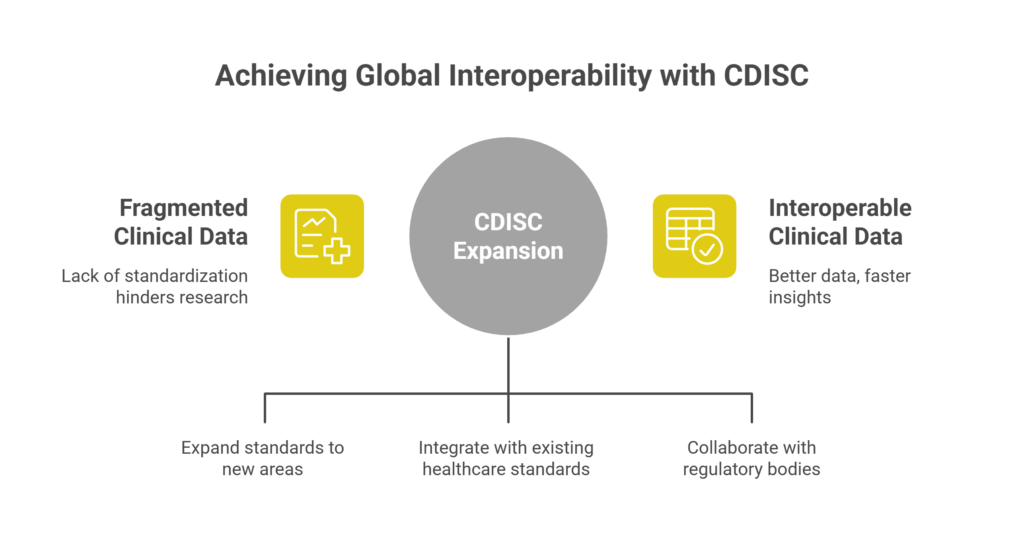
Before the establishment of CDISC in the late 1990s, clinical research data was largely fragmented. Each sponsor or research organization developed its own proprietary data formats, making it difficult to share or compare results across studies. Inconsistent terminologies, diverse data structures, and varying statistical conventions created significant challenges for regulatory submissions and cross-study analyses. These inefficiencies resulted in delays in drug development, increased costs, and even compromised patient safety in some instances.
CDISC emerged with a clear mission: to create platform-independent, globally recognized standards for clinical research data. Its primary goal was to improve data quality, consistency, and traceability while enabling more efficient submission processes to regulatory authorities. One of its earliest and most influential contributions was the Study Data Tabulation Model (SDTM), which standardized the organization of clinical trial data for submission purposes. Complementing this was the Analysis Data Model (ADaM), designed to support traceable and reproducible statistical analyses. Together, these models provided a foundation for regulatory-grade data that could be consistently interpreted across studies and geographies.
The early focus of CDISC was not only technical. Its vision emphasized regulatory alignment, collaboration among stakeholders, and the creation of an ecosystem where clinical data could be reliably compared and reused. This approach positioned CDISC as both a technical and strategic solution to the growing complexity of global clinical research.
Table 1: Origins of CDISC and the Need for Standardization
| Sr. No | Aspect | Description |
| 1. | State of Clinical Research Pre-CDISC | Data was fragmented; each sponsor or organization used proprietary formats. Inconsistent terminologies, diverse structures, and varying statistical conventions made data sharing and comparison difficult. Challenges included regulatory submission delays, increased costs, and potential compromises in patient safety. |
| 2. | CDISC Mission | To create platform-independent, globally recognized standards for clinical research data. Focused on improving data quality, consistency, and traceability, while enabling efficient regulatory submissions. |
| 3. | Key Early Contributions | – Study Data Tabulation Model (SDTM): Standardized organization of clinical trial data for submissions. – Analysis Data Model (ADaM): Enabled traceable and reproducible statistical analyses. |
| 4. | Strategic Focus | Beyond technical standardization, CDISC emphasized regulatory alignment, stakeholder collaboration, and creating an ecosystem where data could be reliably compared and reused globally. |
| 5. | Impact | Provided a foundation for regulatory-grade data, allowing consistent interpretation across studies and geographies. Positioned CDISC as both a technical and strategic solution for global clinical research. |
Regulatory Acceptance and Global Adoption
A defining milestone in the evolution of CDISC standards was formal regulatory endorsement. United States Food and Drug Administration began encouraging and eventually requiring submissions in CDISC-compliant formats, especially for new drug applications. This regulatory mandate transformed CDISC from a voluntary best practice into an essential component of drug development. It sent a strong signal to global pharmaceutical and biotech companies that standardization was no longer optional.
Regulatory acceptance quickly spread beyond the United States. Agencies including the Pharmaceuticals and Medical Devices Agency, European Medicines Agency, and the National Medical Products Administration began recognizing CDISC standards for submissions. Alignment with the International Council for Harmonisation further cemented the international credibility of CDISC. For sponsors conducting multinational clinical trials, this created a common “data language,” reducing regional inconsistencies and simplifying global program management.
This global acceptance also encouraged widespread adoption within industry. Biopharmaceutical companies, contract research organizations, and clinical data management vendors invested in expertise and infrastructure to ensure compliance with CDISC standards. These investments improved operational efficiency, reduced data processing errors, and accelerated timelines for regulatory submissions.
Expanding Beyond Traditional Clinical Trials
Initially, CDISC standards focused primarily on conventional clinical trials. However, as biomedical research evolved, the need for standardization expanded into other types of studies. Observational research, patient registries, and real world data initiatives introduced new challenges in data capture, structure, and exchange. Recognizing this, CDISC broadened its portfolio with initiatives such as the Operational Data Model (ODM) and the Clinical Data Acquisition Standards Harmonization (CDASH). ODM supports the exchange and archiving of clinical trial data across platforms, while CDASH standardizes the collection of data at its source, ensuring consistency from the point of entry.
Therapeutic area-specific standards represented another significant evolution. These standards provide guidance for structuring data within a particular disease area, ensuring that nuances critical to clinical interpretation are captured consistently. Oncology, neuroscience, rare diseases, and cardiology are examples where these standards have been especially valuable. By implementing disease-specific rules for data capture, CDISC enables more reliable comparisons across studies, facilitates meta-analyses, and strengthens the scientific rigor of clinical research.
Interoperability in a Digital Health Ecosystem
Modern clinical research extends far beyond trial sites and regulatory submissions. The integration of electronic health records, wearable devices, digital biomarkers, and advanced analytics platforms has created a complex digital ecosystem. In this context, interoperability is not just about regulatory compliance; it is about ensuring that data can flow seamlessly across clinical care, research, and analytical systems.
CDISC standards serve as a critical bridge in this ecosystem. They enable structured data exchange between clinical trial systems, research databases, and analytical platforms. For example, integrating real world data from electronic health records into clinical studies becomes feasible when both systems adhere to standardized data models. The alignment of CDISC with other healthcare data standards, such as those developed by Health Level Seven International, further strengthens this capability. Together, these standards support real time analytics, longitudinal patient tracking, and evidence generation that can inform both clinical care and regulatory decision-making.
The benefits extend to data sharing and secondary research. Standardized data enables meta-analyses, systematic reviews, and cross-study comparisons that would be impractical with non-standardized datasets. Researchers can focus on generating insights rather than spending months reconciling inconsistent data formats, which accelerates the pace of innovation and improves patient outcomes.
Challenges in Implementation
Despite the clear benefits, implementing CDISC standards is not without challenges. Smaller organizations and emerging research regions may face limitations in technical expertise, financial resources, or infrastructure. Mapping legacy data to current CDISC standards can be resource-intensive, especially for studies conducted before standardization became widespread. Additionally, the rapid evolution of clinical research, including decentralized trials, genomics, real world evidence, and artificial intelligence, continues to test the flexibility of existing models.
To address these challenges, CDISC has embraced a community-driven approach. Open access resources, collaborative working groups, and continuous revision cycles ensure that the standards remain practical, scientifically robust, and relevant. Training programs, workshops, and regulatory guidance further support organizations in implementing standards effectively.
The Future of CDISC and Global Interoperability
The future of clinical research is increasingly collaborative, data-driven, and global. The demand for cross-border research, real world evidence, and rapid responses to public health emergencies underscores the need for standardized, interoperable data. CDISC is well positioned to support this future by expanding its standards into new research domains while maintaining the principles of clarity, traceability, and consistency.
Emerging areas such as precision medicine, artificial intelligence-driven analytics, and patient-centric research introduce new data types and complexities. CDISC’s ongoing evolution, including integration with healthcare data standards and engagement with regulators, positions it as a cornerstone of next-generation clinical research. The ultimate goal remains consistent: enabling better data, faster insights, and improved patient outcomes worldwide.
Final Thought
The evolution of CDISC standards demonstrates the transformative power of thoughtful standardization in clinical research. From solving early challenges of fragmented trial data to enabling global interoperability in a complex digital ecosystem, CDISC has become essential for modern biomedical research. Its adoption by regulators, alignment with international standards, expansion into new research domains, and support for digital health interoperability highlight its enduring relevance.
In a world where clinical research increasingly spans countries, platforms, and technologies, CDISC standards serve as a common language that connects stakeholders, reduces inefficiencies, and strengthens the scientific foundation of evidence generation. By ensuring consistency, traceability, and reliability, CDISC is not just a technical standard, it is a strategic enabler of global health innovation.
Read More: SDTM Implementation Trends Across Therapeutic Areas
References
- CDISC Standards Overview – Official description of CDISC foundational and related standards, including SDTM, ADaM, Controlled Terminology, and Therapeutic Area Standards (accessible free to the public). Available at:
https://www.cdisc.org/standards - Study Data Standards Resources (FDA) – U.S. FDA’s guidance hub for electronic submissions of study data, including reference to CDISC standards and technical conformance guides. Available at:
https://www.fda.gov/industry/fda-data-standards-advisory-board/study-data-standards-resources - Providing Regulatory Submissions in Electronic Format – Standardized Study Data (FDA Guidance) – FDA’s official guidance detailing requirements for submitting standardized clinical and nonclinical study data under section 745A of the FD&C Act. Available at:
https://www.fda.gov/regulatory-information/search-fda-guidance-documents/providing-regulatory-submissions-electronic-format-standardized-study-data - CDER Study Data Standards Research and Development – Page outlining FDA’s ongoing work with CDISC standards and future plans to improve data exchange mechanisms and interoperability. Available at:
https://www.fda.gov/drugs/electronic-regulatory-submission-and-review/cder-study-data-standards-research-and-development - CDISC Controlled Terminology – CDISC’s official page explaining controlled terminology and its role in standardized clinical data. Available at:
https://www.cdisc.org/standards/terminology/controlled-terminology - CDISC Data Exchange Standards – Overview of CDISC data exchange standards like Define‑XML, Dataset‑XML, and Dataset‑JSON that support interoperability and regulatory submissions. Available at:
https://www.cdisc.org/standards/data-exchange
Frequently Asked Questions (FAQs)
What is CDISC and why is it important for clinical research?
CDISC is a global organization that creates standards for clinical research data. Its standards improve consistency, traceability, and regulatory compliance, making trials more efficient and reliable.
What are the core CDISC standards and their roles?
Key standards include SDTM for organizing trial data, ADaM for reproducible analyses, and CDASH for standardized data collection. Together, they ensure high-quality, regulatory-ready data.
How do CDISC standards support global data interoperability?
CDISC provides a common data language, enabling seamless data exchange across countries, sponsors, and regulatory agencies, and supporting integration with electronic health systems.
Are CDISC standards mandatory for regulatory submissions?
Many regulatory authorities, including the FDA and PMDA, require or recommend CDISC-compliant submissions for certain study types, making adherence essential for multinational trials.
What are the future trends for CDISC standards in clinical research?
CDISC is evolving to support decentralized trials, real world data, AI analytics, and patient-centric research, ensuring seamless interoperability and faster global collaboration.
