


USA Oncology Clinical Trial Market: Why Specialized CRO Services Matter in accelerating cancer research, improving patient recruitment, ensuring regulatory compliance, and supporting precision oncology and advanced cancer drug development in the USA.
Introduction
The USA oncology clinical trial market is growing rapidly due to the increasing prevalence of cancer, rising investments in precision medicine, and continuous advancements in immuno-oncology and targeted therapies. Pharmaceutical companies, biotechnology organizations, and healthcare innovators are heavily investing in oncology research to develop safer and more effective cancer treatments for patients worldwide. As oncology pipelines continue to expand, the demand for efficient and specialized clinical trial management services has also increased significantly.
Oncology clinical trials are among the most complex studies in the healthcare industry. These studies involve complicated protocols, strict regulatory requirements, challenging patient recruitment processes, and extensive safety monitoring. Due to these challenges, many sponsors now prefer partnering with specialized oncology CRO providers that offer deep therapeutic expertise and operational excellence in cancer research.
USA Oncology Clinical Trial Market Snapshot
| Segment | Market Trend |
| Precision Oncology | Rapid Growth |
| Immuno-Oncology Trials | High Demand |
| Decentralized Oncology Trials | Increasing Adoption |
| Biomarker-Driven Studies | Expanding Quickly |
| Cell & Gene Therapy Trials | Strong Investment |
| AI in Oncology Research | Emerging Trend |
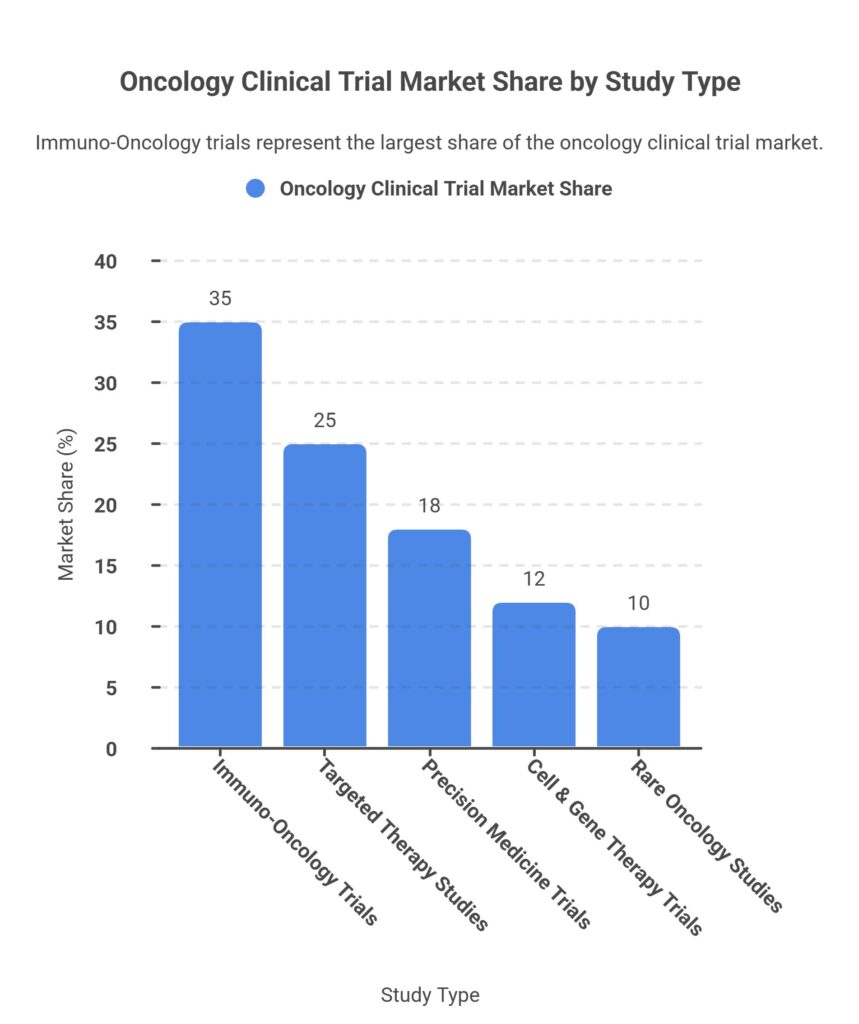
The growing demand for advanced cancer therapies has significantly increased the need for specialized clinical research support. Sponsors are now actively seeking reliable partners capable of managing complex oncology studies with speed, regulatory accuracy, and patient-centric approaches.
Understanding the USA Oncology Clinical Trial Market
The United States remains one of the leading countries for oncology clinical research because of its advanced healthcare infrastructure, strong regulatory environment, and access to top cancer research institutions. The country hosts a large number of oncology studies across multiple therapeutic areas, including breast cancer, lung cancer, colorectal cancer, leukemia, prostate cancer, and rare oncology indications.
The growth of personalized medicine has further transformed oncology clinical trials in the USA. Modern cancer therapies increasingly rely on biomarkers, genetic profiling, and targeted treatment approaches, making clinical trial execution more specialized than ever before. This shift has created a greater need for oncology-focused CRO services that understand the scientific and operational complexities of cancer studies.
Why Oncology Clinical Trials are Highly Complex
Oncology studies are significantly more difficult to manage compared to general clinical trials. Cancer patients often require specialized care, continuous monitoring, and highly personalized treatment protocols throughout the study duration. In addition, oncology trials typically involve advanced trial designs that require experienced professionals and strong infrastructure support.
One of the biggest challenges in oncology clinical research is patient recruitment. Many oncology studies require participants with very specific disease stages, biomarker profiles, or previous treatment histories. Finding suitable patients within limited timelines becomes difficult without proper recruitment strategies and established oncology site networks.
Another major challenge is regulatory compliance. Oncology studies must follow strict FDA guidelines, Good Clinical Practice standards, safety reporting regulations, and ethical requirements. Sponsors need specialized teams that can manage protocol amendments, adverse event reporting, and regulatory submissions efficiently throughout the study lifecycle.
The increasing use of adaptive trial designs, basket studies, umbrella trials, and decentralized clinical trial models has also added complexity to oncology research operations. These modern trial approaches require strong coordination between investigators, sponsors, technology providers, and CRO teams.
What are Specialized Oncology CRO Services?
Specialized oncology CRO services are clinical research solutions designed specifically for cancer-related studies. These services help pharmaceutical companies, biotechnology firms, and healthcare organizations manage oncology clinical trials more effectively and efficiently.
Unlike general CROs, oncology-focused CRO providers possess therapeutic expertise in cancer research, experienced oncology professionals, and access to specialized site networks. These organizations understand the scientific, operational, and regulatory requirements associated with oncology drug development.
Specialized oncology CRO services generally support sponsors in areas such as clinical trial management, medical monitoring, patient recruitment, regulatory affairs, pharmacovigilance, biostatistics, data management, site monitoring, and protocol development. Their expertise helps sponsors accelerate oncology drug development while maintaining regulatory compliance and high-quality clinical data.Organizations searching for reliable Oncology clinical trial services in the USA are increasingly prioritizing CRO partners that offer scientific expertise, operational flexibility, and strong oncology site networks to support faster and more efficient cancer research.
Growing Demand for Oncology CRO Services in the USA
The demand for oncology CRO services in the USA has increased significantly over the last few years. One major reason for this growth is the rising number of oncology drug approvals by the FDA. Pharmaceutical companies are rapidly expanding their oncology pipelines with innovative therapies such as immunotherapies, targeted treatments, biosimilars, and cell and gene therapies.
Precision oncology is another major factor driving CRO demand. Biomarker-driven studies require specialized expertise in molecular diagnostics, patient stratification, and genomic data management. Oncology-focused CRO providers help sponsors integrate these advanced scientific approaches into their clinical trial programs.
The growing competition among biotechnology companies has also increased the need for faster trial execution. Sponsors want to reduce study startup timelines, accelerate patient enrollment, and improve operational efficiency to bring new cancer therapies to market quickly. Specialized oncology CROs provide the infrastructure and expertise needed to achieve these goals.
In addition, outsourcing oncology trial operations allows sponsors to reduce internal operational costs while gaining access to experienced oncology research professionals and advanced technologies.
Benefits of Specialized Oncology CRO Services
One of the biggest advantages of partnering with an oncology-focused CRO is access to deep therapeutic expertise. Oncology CRO teams typically include experienced oncologists, clinical research professionals, medical monitors, regulatory specialists, and pharmacovigilance experts who understand the complexities of cancer studies.
Specialized CRO providers also improve patient recruitment outcomes through established investigator relationships and oncology site networks. Their experience in handling difficult enrollment criteria helps sponsors identify eligible patients more efficiently and reduce recruitment delays.
Another major benefit is regulatory support. Oncology CROs help sponsors navigate complex FDA requirements, maintain compliance with ICH-GCP guidelines, and manage oncology-specific safety reporting obligations. This reduces regulatory risks and improves overall study quality.
Key Benefits of Oncology CRO Services
| Benefit | Impact on Oncology Trials |
| Faster Patient Recruitment | Reduced enrollment timelines |
| Regulatory Expertise | Better FDA compliance |
| Oncology Site Networks | Improved patient access |
| Advanced Data Management | High-quality clinical data |
| Pharmacovigilance Support | Enhanced patient safety |
| Operational Flexibility | Faster study execution |
Advanced data management capabilities are also essential in oncology research. Cancer studies generate large volumes of clinical, imaging, laboratory, and biomarker data that require accurate collection and analysis. Specialized CRO providers use advanced clinical technologies and oncology-specific data management systems to maintain data integrity throughout the trial lifecycle.
Pharmacovigilance is another critical area where oncology CRO services provide value. Cancer therapies often involve severe adverse events and immune-related toxicities that require continuous monitoring and accurate safety reporting. Oncology-focused safety teams help sponsors maintain patient safety while meeting global pharmacovigilance requirements.
The Role of Technology in Modern Oncology Trials
Technology is transforming the oncology clinical trial landscape in the USA. Artificial intelligence, electronic data capture systems, decentralized trial platforms, and real-world evidence solutions are helping sponsors improve trial efficiency and patient engagement.
AI-driven technologies are increasingly being used for patient identification, enrollment forecasting, protocol optimization, and predictive analytics. These tools help sponsors reduce operational delays and improve decision-making during clinical development.
Decentralized clinical trial models are also becoming more common in oncology research. Hybrid trial approaches that combine remote monitoring, telemedicine, and digital patient engagement tools help improve patient convenience and retention.
Real-world evidence is playing an increasingly important role in oncology drug development as regulatory agencies recognize the value of real-world oncology data in supporting clinical and post-marketing decisions. Specialized CRO providers are helping sponsors integrate these technologies into modern oncology research programs.
Challenges Facing the USA Oncology Clinical Trial Market
Despite rapid growth, the oncology clinical trial industry still faces several operational and financial challenges. Oncology studies are expensive due to complex protocols, biomarker testing, imaging requirements, and long-term patient follow-up.
Patient retention is another major challenge in cancer clinical research. Since many oncology trials involve long treatment durations, maintaining patient participation throughout the study can be difficult.
The increasing competition for eligible oncology patients has also created recruitment challenges. Multiple sponsors often compete for the same patient population, particularly in rare cancer indications and biomarker-driven studies.
Regulatory complexity continues to evolve as the FDA introduces new oncology guidance and safety requirements. Sponsors and CRO providers must remain continuously updated with changing regulations to avoid compliance risks.
Additionally, modern oncology trials generate highly complex datasets involving genomics, imaging, biomarkers, and survival outcomes, making data management more challenging than traditional clinical studies.
Why Sponsors Prefer Oncology-Focused CRO Partners
Many pharmaceutical and biotechnology companies now prefer oncology-specialized CRO providers because of their focused expertise and operational flexibility. Oncology CROs are better equipped to manage complex cancer studies and deliver faster results compared to general clinical research organizations.
Sponsors benefit from improved investigator relationships, stronger patient recruitment strategies, advanced safety monitoring capabilities, and better risk management support. These advantages help improve study timelines, reduce operational delays, and enhance overall trial quality.Emerging biotech companies particularly benefit from outsourcing oncology operations because it allows them to access experienced clinical teams without investing heavily in internal infrastructure. This flexibility helps smaller organizations scale their oncology development programs efficiently.
Future of the USA Oncology Clinical Trial Market
The future of oncology clinical trials in the USA will continue to be shaped by innovation, precision medicine, and patient-centric research approaches. Personalized therapies, biomarker-driven studies, and advanced immunotherapies are expected to dominate future oncology pipelines.
Cell and gene therapy trials are also expected to increase significantly in the coming years, creating new opportunities for specialized oncology CRO providers with advanced infrastructure capabilities.
Artificial intelligence and automation will continue improving patient recruitment, protocol feasibility, and clinical operations management. Decentralized clinical trial models are likely to become more widely adopted as sponsors focus on improving patient accessibility and retention.
Diversity and inclusion in oncology research will also become a major industry focus. Sponsors are increasingly working to improve representation across different patient populations to ensure more accurate and equitable clinical outcomes.
The USA oncology clinical trial market is expanding rapidly as pharmaceutical and biotechnology companies continue investing in innovative cancer therapies. However, oncology clinical research remains one of the most complex areas in the healthcare industry due to strict regulatory requirements, advanced trial designs, difficult patient recruitment, and intensive safety monitoring needs.
Specialized oncology CRO services have become essential for sponsors seeking efficient, compliant, and high-quality oncology clinical trial execution. These CRO providers offer deep therapeutic expertise, advanced operational capabilities, and specialized technologies that help accelerate cancer drug development while improving patient outcomes.
As the oncology research landscape continues evolving, sponsors that partner with experienced oncology-focused CRO organizations will be better positioned to manage complex clinical programs, reduce development timelines, and successfully bring innovative cancer treatments to market.
Read More: Addressing the Operational Complexity of Modern Oncology Clinical Trials
References
- National Cancer Institute (NCI) – https://www.cancer.gov/
- U.S. Food and Drug Administration (FDA Oncology Center of Excellence) – https://www.fda.gov/about-fda/oncology-center-excellence
- American Society of Clinical Oncology (ASCO) – https://www.asco.org/
- ClinicalTrials.gov – https://clinicaltrials.gov/
- World Health Organization (WHO Cancer Program) – https://www.who.int/health-topics/cancer
- National Comprehensive Cancer Network (NCCN) – https://www.nccn.org/
- Society for Clinical Research Sites (SCRS) – https://myscrs.org/
- International Council for Harmonisation (ICH-GCP) – https://www.ich.org/
Frequently Asked Questions (FAQs)
Oncology clinical trial services include clinical research support solutions specifically designed for cancer studies. These services generally cover patient recruitment, trial management, regulatory support, pharmacovigilance, clinical monitoring, and data management.
Specialized oncology CRO services are important because oncology studies are highly complex and require experienced professionals, advanced technologies, regulatory expertise, and strong patient recruitment strategies to ensure successful trial execution.
Common challenges include difficult patient recruitment, regulatory compliance, complex protocols, biomarker integration, safety monitoring, patient retention, and high operational costs.
Technology is improving oncology clinical research through artificial intelligence, decentralized clinical trial models, electronic data capture systems, real-world evidence integration, and advanced patient monitoring solutions.
Sponsors should evaluate oncology expertise, FDA compliance experience, site networks, patient recruitment capabilities, technology infrastructure, pharmacovigilance support, and operational flexibility before selecting an oncology CRO partner
